Focus on Research & Community

Open Food Facts Days 2026

Fri 13th – Sat 14th November
Paris, France

Register here

Basato sulla scienza, ed in aiuto della Scienza

🔬 Open Science & Digital Commons • Since 2012

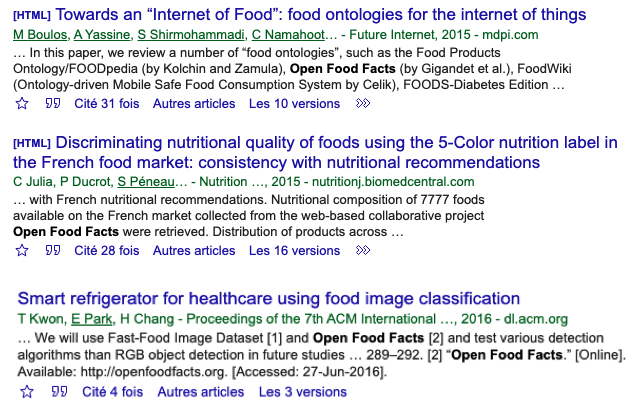
Open Food Facts è stato citato come fonte in oltre 600 articoli scientifici (oltre 500 su Google Scholar). Poiché la scienza è uno dei nostri pilastri, Open Food Facts si avvale anche di ricerche scientifiche sottoposte a revisione paritaria per informare il pubblico, come quelle del gruppo Nutri-Score e NOVA group, e le rende accessibili a un numero molto ampio di persone in tutto il mondo.

600+
Google Scholar Papers
Esplora le pubblicazioni scientifiche che citano Open Food Facts
138+
Curated Studies
Indexed in our research showcase
100%
Open Data (ODbL)
Free, transparent & verifiable
100+
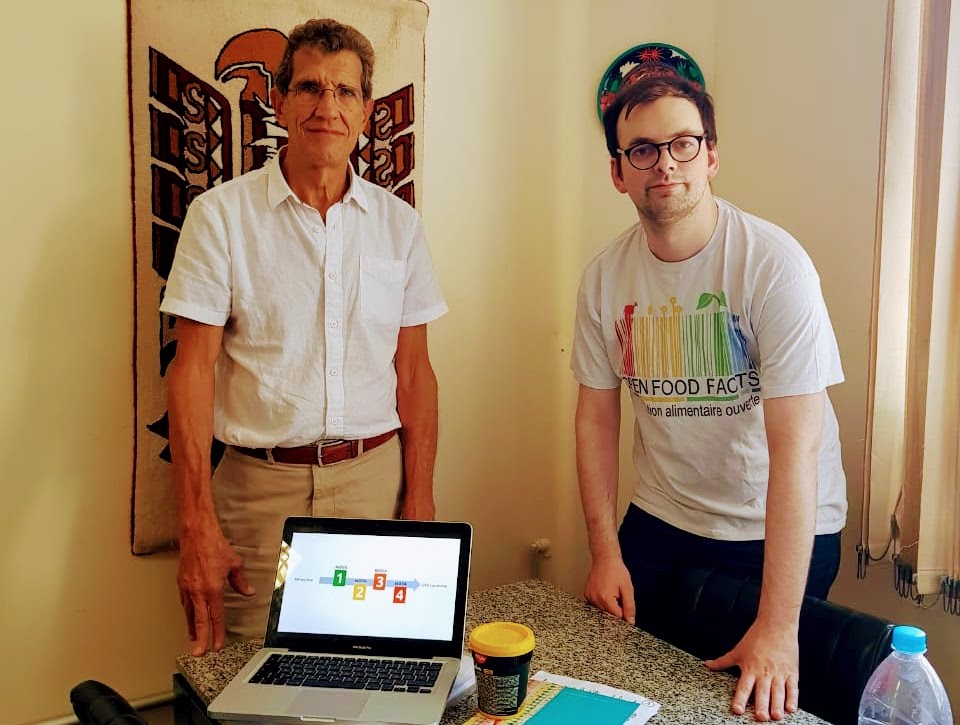
Abbiamo avuto l'opportunità di incontrare il team di ricerca di EREN per comprendere meglio le loro esigenze scientifiche e i miglioramenti di cui necessitano in Open Food Facts.
Institutes, labs & universities
Core Foundations

Our Three Scientific Pillars

La scienza è uno dei pilastri fondamentali di Open Food Facts.

🥗

1. Science-Based Scoring

We do not invent proprietary scores. We strictly implement official, peer-reviewed public health metrics: Nutri-Score (EREN / Inserm), NOVA food processing classification (Prof. Carlos Monteiro, USP), and Eco-Score / Green-Score (ADEME Agribalyse), making complex science understandable in grocery store aisles.

🤖

2. Impatto scientifico misurabile

Our open-source platform combines citizen crowdsourcing with optical character recognition (OCR), neural vision networks, and natural language processing to extract, structure, and validate nutritional declarations, ingredient lists, and additives on millions of products.

🌐

3. Returned to the Global Commons

All collected product data and computed indicators are redistributed under the Open Database License (ODbL). Researchers worldwide enjoy barrier-free, permanent access to high-fidelity food data without paywalls, commercial restrictions, or vendor lock-in.

Collaborative Research

Working Hand-in-Hand with Research Teams

Partnering with world-renowned epidemiological institutes, public health agencies, and academic labs.

Nutritional Epidemiology
Il team di Open Food Facts incontra il team di ricerca EREN

Incontra il team di ricerca EREN

We met and collaborated with the EREN research team (Inserm / INRAE / CNAM / Université Sorbonne Paris Nord) led by Prof. Serge Hercberg and Dr. Chantal Julia, aligning data taxonomies and validating automated Nutri-Score calculation algorithms.

Academic Scan Parties
Scan party in Belgio

Collaborazione con l'Università di Liege

The clinical nutrition department at the University of Liège organized large-scale student Scan Parties in Belgian supermarkets, building a comprehensive national food dataset to support comparative nutrition benchmarks across Europe.

Citizen Science
Crowdsourcing and Citizen Science tools

Crowdsourcing for Research at Scale

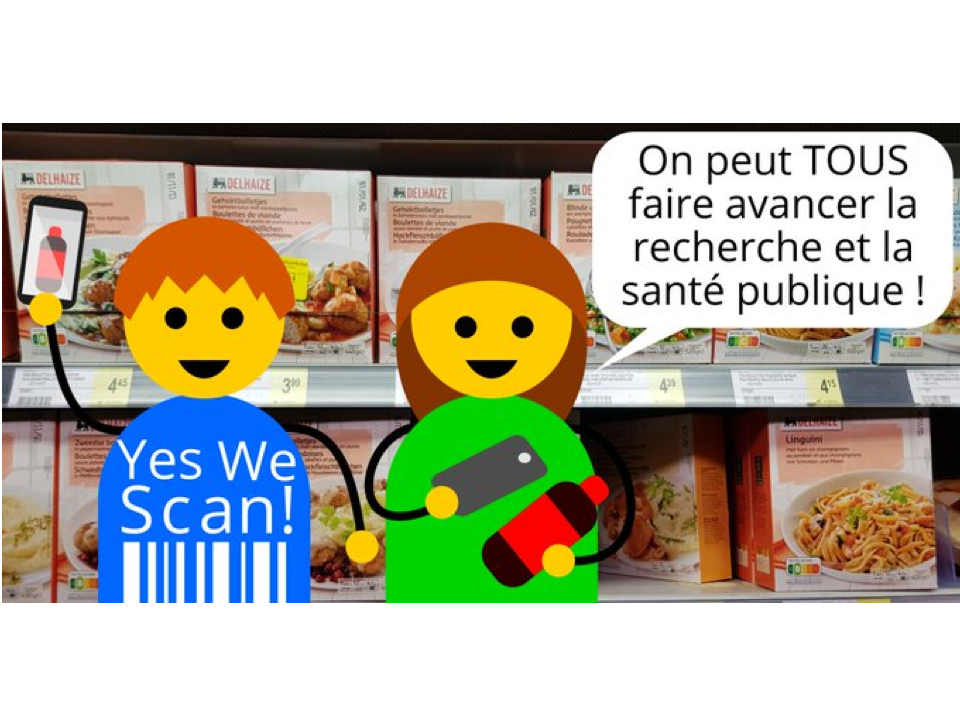
Open Food Facts equips research teams with self-service tools, specialized mobile scanning modes, and barcode campaign dashboards, allowing academic labs to build representative food brand samples rapidly at near-zero expense.

Google Scholar
Articoli che citano Open Food Facts su Google Scholar

Peer-Reviewed Publications

Open Food Facts data is actively cited and analyzed in hundreds of peer-reviewed journals, including The Lancet, BMJ, Nature Food, and Nutrients, spanning nutritional epidemiology, artificial intelligence, and environmental life cycle analysis.

"Date le grandi sfide per la salute pubblica legate all'alimentazione che stiamo affrontando oggi su scala globale, è fondamentale promuovere il consumo di una dieta più favorevole alla salute. In questo contesto, un database digitale contenente informazioni sui vari aspetti salutari degli alimenti (composizione nutrizionale, grado di lavorazione, additivi, ecc.) è uno strumento essenziale per la ricerca e l'azione in materia di salute pubblica
SH

Professor Serge Hercberg - creatore del Nutri-Score

Emeritus Professor of Nutrition, Université Sorbonne Paris Nord • Creator of the Nutri-Score

Transparency & Commons

How Open Data Accelerates Scientific Research

The Wikipedia of food: turning messy real-world packaging into structured research infrastructure.

📊

Standardized Food Taxonomies

Open Food Facts organizes multi-country packaging data with standardized taxonomies for food categories, ingredients, allergens, food additives (E-numbers), nutrient reference values, and recycling instructions across 150+ countries.

🧬

Interdisciplinary Exploration

Beyond clinical nutrition, our database powers breakthroughs in computer science (optical character recognition, multimodal vision-language models), behavioral economics (supermarket nudge studies), and food sustainability (greenhouse gas footprints).

🔄

Reproducibility & Open Science

Scientific credibility demands reproducibility. Because Open Food Facts archives historic snapshots and open calculation source code, researchers can replicate findings, benchmark algorithms, and publish open datasets without commercial secrecy.

Resources & Access

Researcher Toolkit & Data Access

Everything you need to incorporate Open Food Facts into your lab's next research project.

📦 Database Snapshots

Download daily database dumps in JSONL, CSV, MongoDB, and Parquet formats for big-data and statistical analyses in Python, R, or Julia.

Access Data Dumps ➔

🔌 REST API & SDKs

Query live product data with our free REST API and official client libraries for Python (openfoodfacts-python), R, Dart, and JavaScript.

Read API Docs ➔

🔬 Curated Publications

Browse 138+ academic articles categorized by research themes: Nutrition, NOVA & UPF, Additives, AI & Vision, and Environment.

Browse Publications ➔

📖 Science Wiki & FAQ

Explore our community science guide with best practices for handling missing nutrients, deduplication, and geographic filtering.

Visit Science Wiki ➔
Academic Citation

Con l'aiuto di strumenti potenti e della comunità di Open Food Facts

Ensure proper attribution under the Open Database License (ODbL) by referencing the database snapshot date.

APA Style (7th Edition)
Apri i dati alimentari. (2025). Open Food Facts Database [Data set]. Recuperato da https://world.openfoodfacts.org/data

BibTeX Format
@misc{openfoodfacts_database,
  author       = {{Open Food Facts}},
  title        = {Open Food Facts: A Free, Collaborative Global Food Database},
  year         = {2025},
  url          = {https://world.openfoodfacts.org/data},
  note         = {Open Database License (ODbL)}
}